
Christine Baker
Stanford University
Seminar Information
Engineering Building Unit 2 (EBU2)
Room 479
Seminar Recording Available: Please contact seminar coordinator, Jake Blair at (j1blair@ucsd.edu)
The surf zone is a highly dynamic region along the coast. Breaking waves dissipate energy, inject turbulence into the water column, and drive complex rotational flows that influence the transport and mixing of contaminants, bacteria, larvae, and other materials. Gradients in wave-induced momentum flux (radiation stress) due to wave breaking are known to drive mean currents. However, observations also indicate significant energy in the surf zone associated with low-frequency eddies.
This talk examines the mechanisms that generate vorticity in the surf zone, with emphasis on two primary processes: (1) spatial gradients in wave forcing and (2) instabilities of sheared mean flows. Vertical vorticity injected near the ends of breaking waves is characterized in wave-basin experiments and depth-averaged, wave-resolving model simulations. The analysis is then extended to 3D wave-resolving simulations to quantify how different vorticity-generation mechanisms contribute to tracer dispersion, highlighting the potential role of instabilities in the vertically sheared undertow. The talk concludes with perspectives on the limitations of common assumptions in surf-zone studies and on how future experiments can address them.
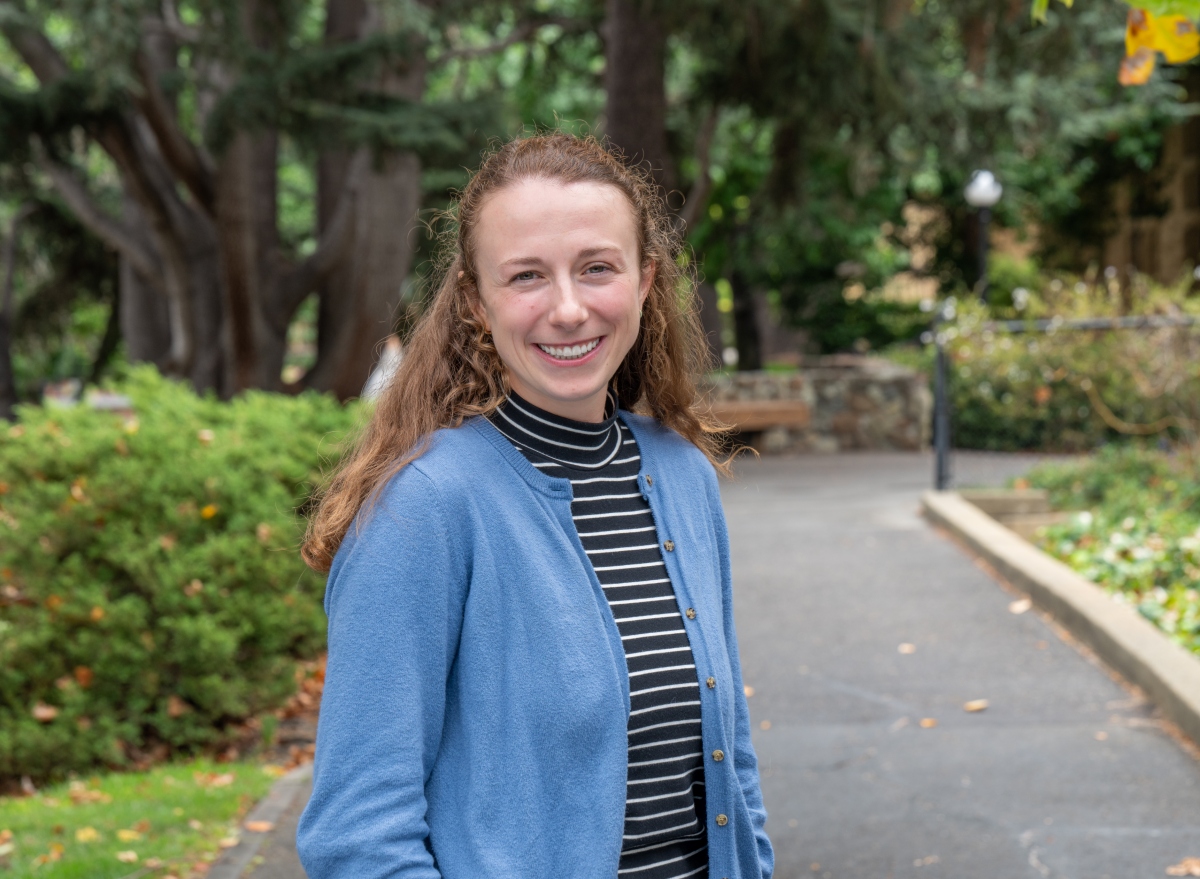
Christine M Baker is an Assistant Professor of Civil and Environmental Engineering at Stanford University in the Doerr School of Sustainability and School of Engineering. She earned her MS and PhD in Civil and Environmental Engineering at the University of Washington and completed a postdoctoral position at North Carolina State University. Baker investigates coastal dynamics using laboratory experiments, numerical modeling, and remotely sensed field observations. Her research interests include wave transformation in shallow water, nearshore circulation, and how these processes alter material transport and shape coastlines.