
Parinaz Naghizadeh
University of California San Diego
Seminar Information
As machine learning algorithms increasingly automate high-stakes decision-making in areas like hiring, lending, and judicial sentencing, individuals often respond strategically to influence their outcomes. These responses create 'moving targets' for ML algorithms due to the reactive nature of human-generated data. In this talk, I will present our group's recent works on managing this challenge, focusing on the impacts of two forms of biased/incomplete information.
First, I will present a prospect-theoretic model to capture the impacts of humans' cognitive biases when responding strategically to algorithmic systems. I will complement our analytical findings based on this model with supporting findings from user studies. Second, we will consider the evolving and uncertain nature of agents' strategic response costs over time. To capture this, we model and analyze algorithm selection as a two-stage robust optimization problem with decision-dependent uncertainty. Our findings here highlight the role of planning in both reducing uncertainty and reducing undesired strategic behavior.
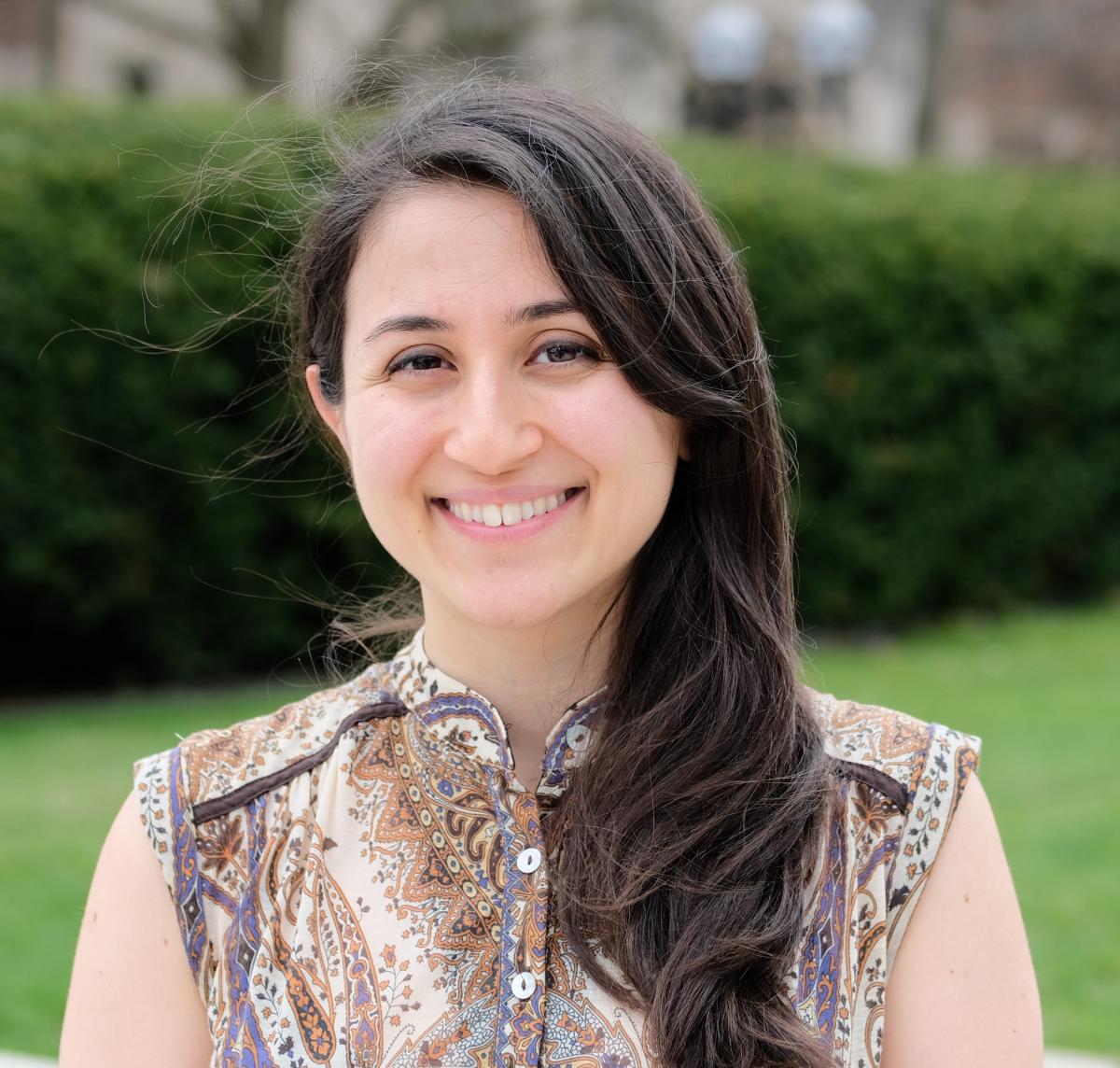
Parinaz Naghizadeh is an Assistant Professor in the Electrical and Computer Engineering Department and the Design Lab at the University of California, San Diego. She received her Ph.D. in electrical engineering and M.Sc. degrees in mathematics and electrical engineering from the University of Michigan, and her B.Sc. in electrical engineering from Sharif University of Technology, Iran. Her research interests are in network economics, game theory, and the ethics and economics of AI. She is a recipient of the NSF CAREER award in 2022, a Rising Stars in EECS in 2017, and a Barbour Scholarship from the University of Michigan in 2014.